Why Cultural Attractions Should Rethink Their Parking Management System to Maximize Revenue

Museums, zoos, aquariums, and botanical gardens welcome millions of visitors each year. These cultural attractions invest heavily in exhibits, programming, and guest services to create memorable experiences. Yet many overlook one of their most valuable assets: the parking lot.
For most visitors, the parking experience is the first and last impression of your attraction. A confusing payment process, long lines at entry, or a parking citation on their windshield can overshadow even the best exhibit. And for attraction operators, outdated parking systems leave significant revenue on the table while creating unnecessary operational headaches.
Modern parking management software offers a better approach. By replacing aging pay stations and manual processes with AI-powered technology, cultural attractions can improve the visitor experience while capturing revenue they're currently missing.
The Parking Challenges Cultural Attractions Face
Cultural attractions have parking needs that differ significantly from office buildings or apartment complexes. Understanding these challenges explains why generic parking solutions often fall short.
Dramatic Fluctuations in Attendance
A zoo might see 500 visitors on a rainy Tuesday and 5,000 on a sunny Saturday. Special exhibits, school field trips, and seasonal events create unpredictable spikes in demand. Traditional parking operations struggle to handle these fluctuations efficiently.
When parking lots fill up during peak times, visitors circle looking for a parking space while traffic flow backs up onto surrounding streets. When attendance is light, parking staff sit idle, and fixed costs continue regardless of revenue.
Complex Visitor Categories
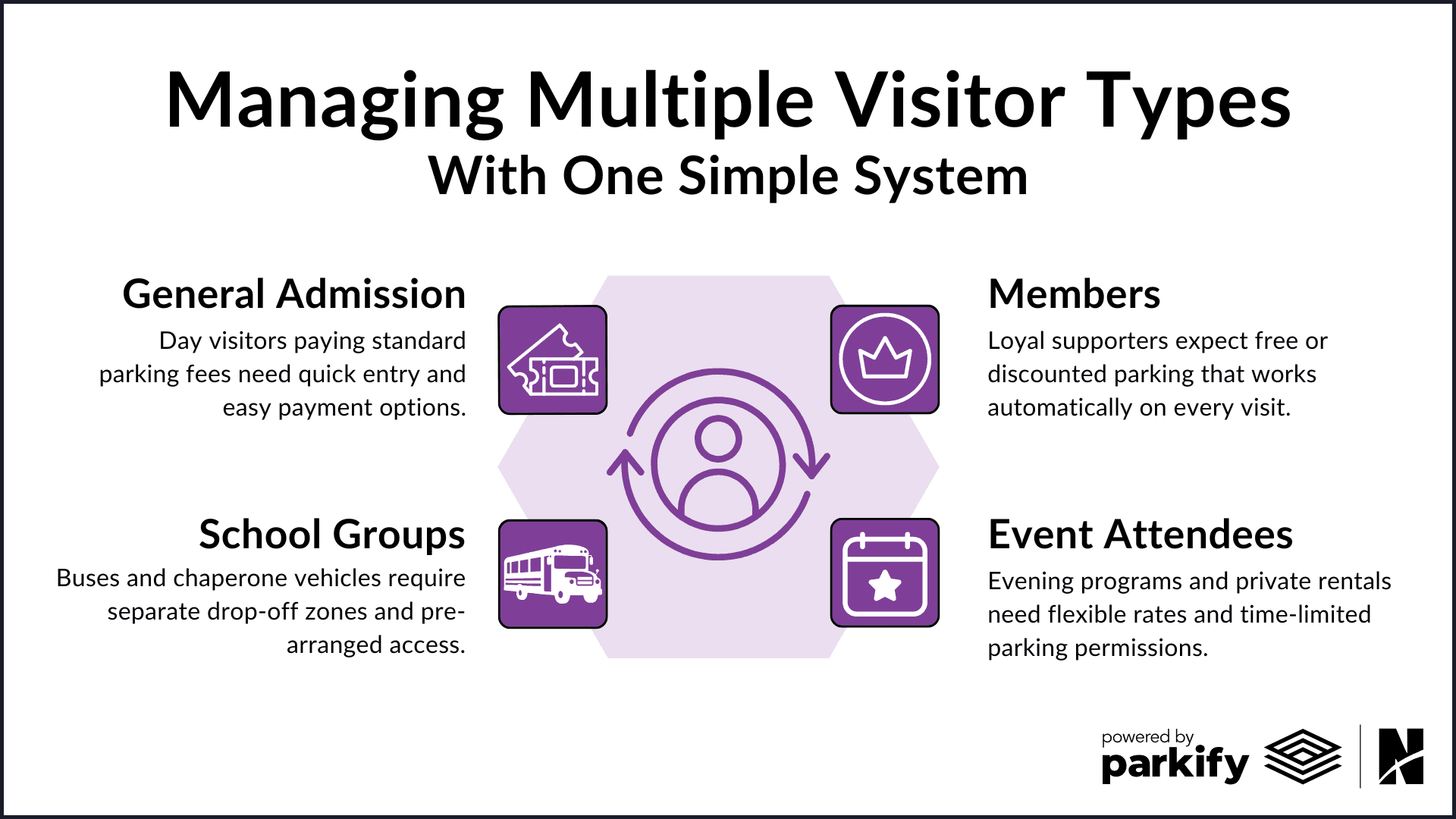
Cultural attractions serve diverse audiences with different parking needs:
General admission visitors paying standard parking fees
Members who expect free parking or reduced rates
School groups arriving by bus with separate drop-off requirements
Event attendees for evening programs or private rentals
Employees and volunteers who need daily access
Managing these different permit types through manual systems creates confusion and slows down the customer experience at entry points.

Aging Infrastructure and High Maintenance Costs
Many cultural attractions operate parking facilities built decades ago. Pay stations break down, gate arms malfunction, and ticket dispensers jam during the busiest periods. Each equipment failure requires a service call, and repairs often take days to complete.
These maintenance costs add up quickly, and the operational disruptions frustrate both team members and visitors.
Missed Revenue Opportunities
Static pricing means attractions charge the same parking fee whether the lot is empty or overflowing. This approach leaves money on the table during high-demand periods while potentially discouraging visitors when a lower rate might fill empty spaces.
Without real-time data on parking availability and revenue, operators make decisions based on guesswork rather than actual performance.
How Modern Parking Technology Solves These Problems
Parkify replaces outdated parking systems with AI-powered software that handles the complexity of cultural attraction parking automatically.
Dynamic Pricing That Responds to Demand
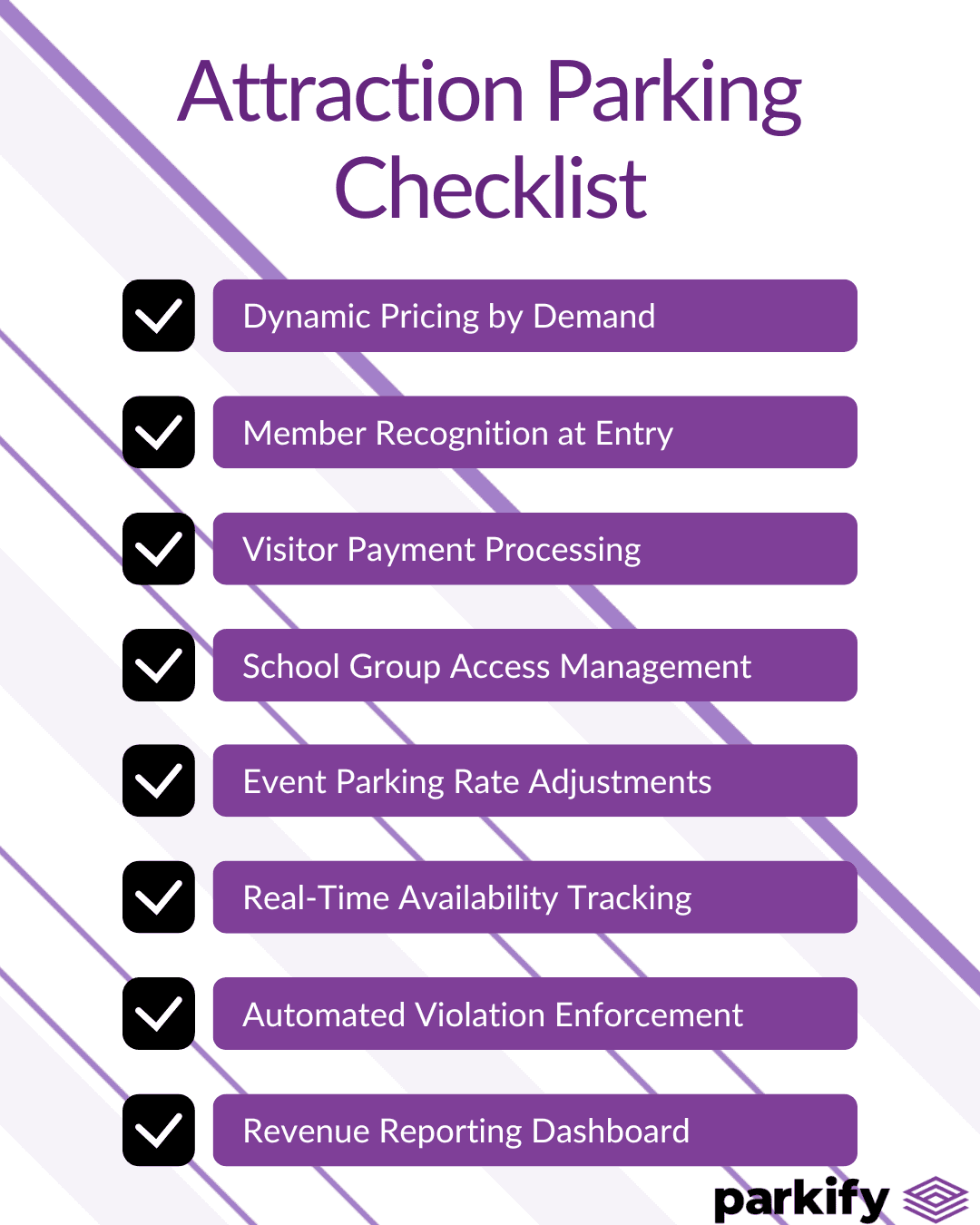
Instead of charging a flat parking fee regardless of conditions, Parkify's AI adjusts rates based on real-time demand, time of day, and special events. When a blockbuster exhibit opens and attendance surges, parking rates optimize automatically. During slower periods, competitive pricing helps fill empty parking spaces.
This dynamic pricing approach captures more revenue during peak times without requiring manual rate changes or staff intervention. Attractions typically see immediate improvement in parking revenue once the system goes live.
License Plate Recognition for Frictionless Entry
License plate recognition cameras identify vehicles automatically as they enter and exit your parking facility. Members register their vehicle license plate once, and the system recognizes them instantly on future visits. No membership cards to fumble with, no tickets to lose, no delays at the gate.
For general visitors, the technology tracks their parking session automatically from entry to exit. The payment process happens through QR codes on their phone rather than aging pay stations that break down.
Self-Service Payment Without Apps
Visitors scan a posted QR code, enter their license plate number, and complete payment in seconds. No mobile app download required. The system accepts credit cards, digital wallets, and contactless payment options that today's guests expect.
This approach eliminates pay station maintenance entirely while providing a faster, more convenient customer experience. And because payment links to the vehicle's license plate, enforcement happens automatically without parking citations scattered across windshields.
Real-Time Visibility and Reporting
Cloud-based parking management software gives attraction operators a dashboard showing exactly what's happening in their parking lot at any moment. How many spaces are available? What's today's revenue compared to last Saturday? Which pricing tiers are performing best?
This real-time data supports better decision-making about staffing, pricing, and capacity management. When you can see parking availability at a glance, you can respond to developing situations before they become problems.
Benefits Specific to Cultural Attractions
The right parking system delivers advantages that matter specifically to museums, zoos, and similar venues.
Improved Guest Experience From Arrival to Departure
The visitor experience starts in the parking lot. When guests arrive and park quickly without confusion, they enter your attraction in a positive mood. When they leave without hunting for a pay station or waiting in exit lines, their final impression reinforces the quality of their visit.
Modern parking operations remove friction from both ends of the visit. Guests focus on your exhibits and programs rather than worrying about parking logistics.
Member Benefits That Actually Work
Cultural attractions rely on membership programs for recurring revenue and visitor loyalty. Parking benefits are a key membership perk, but implementing them through manual systems creates headaches for both members and staff.
With license plate recognition, member parking works automatically. Members register their vehicle information once, and the system grants them appropriate access and discounts on every visit. No cards to scan, no validation stamps, no lines at the membership desk to resolve parking issues.
Event Parking Revenue Capture
Evening events, private rentals, and special programs represent significant revenue opportunities. Modern parking systems make it simple to adjust rates for events, create time-limited access for specific groups, and capture revenue from parking that might otherwise go untracked.
The system handles event parking without requiring additional staff or manual processes. Guests pay through their phones, and the attraction captures every transaction automatically.
Reduced Labor and Maintenance Costs
Traditional parking operations require staff to collect payments, patrol for parking enforcement, and respond to equipment failures. These labor costs continue regardless of attendance levels, and emergency maintenance calls add unpredictable expenses.
Automated parking management reduces staffing requirements while eliminating the maintenance burden of pay stations, ticket dispensers, and aging access control equipment. The savings often exceed the cost of the technology.
Making the Transition
Switching from legacy parking systems to modern technology is simpler than most attraction operators expect.
Assessment
Parkify's team evaluates your current parking operations to understand your visitor categories, pricing structure, and operational challenges. This assessment identifies where automation can replace manual processes and where integration with existing systems makes sense.
Implementation
Professional installation typically takes under 30 days. License plate recognition cameras go in at entry and exit points, QR code signage replaces pay stations, and the cloud-based platform connects to your management dashboard. Your parking facility continues operating throughout the transition.
Launch
Once live, the system handles vehicle recognition, payment processing, and enforcement automatically. Team members receive training on the dashboard and reporting tools, but day-to-day operations require minimal oversight. Most attractions see measurable revenue improvement within the first month.
The Revenue You're Currently Missing
Cultural attractions that rely on outdated parking management systems leave money on the table every day. Static pricing ignores demand fluctuations. Equipment failures disrupt operations and frustrate guests. Manual processes consume staff time that could be spent on visitor services.
Modern parking technology addresses all of these issues while delivering a better parking experience for the visitors who support your mission.
The question isn't whether your attraction should upgrade its parking system. It's how much revenue you're losing while you wait.
Ready to see what modern parking management looks like for your cultural attraction?Contact Parkify for a free strategy session and discover how AI-powered parking technology can maximize your revenue while improving the visitor experience.