The Hidden Cost of Maintaining Outdated Parking Management Technology
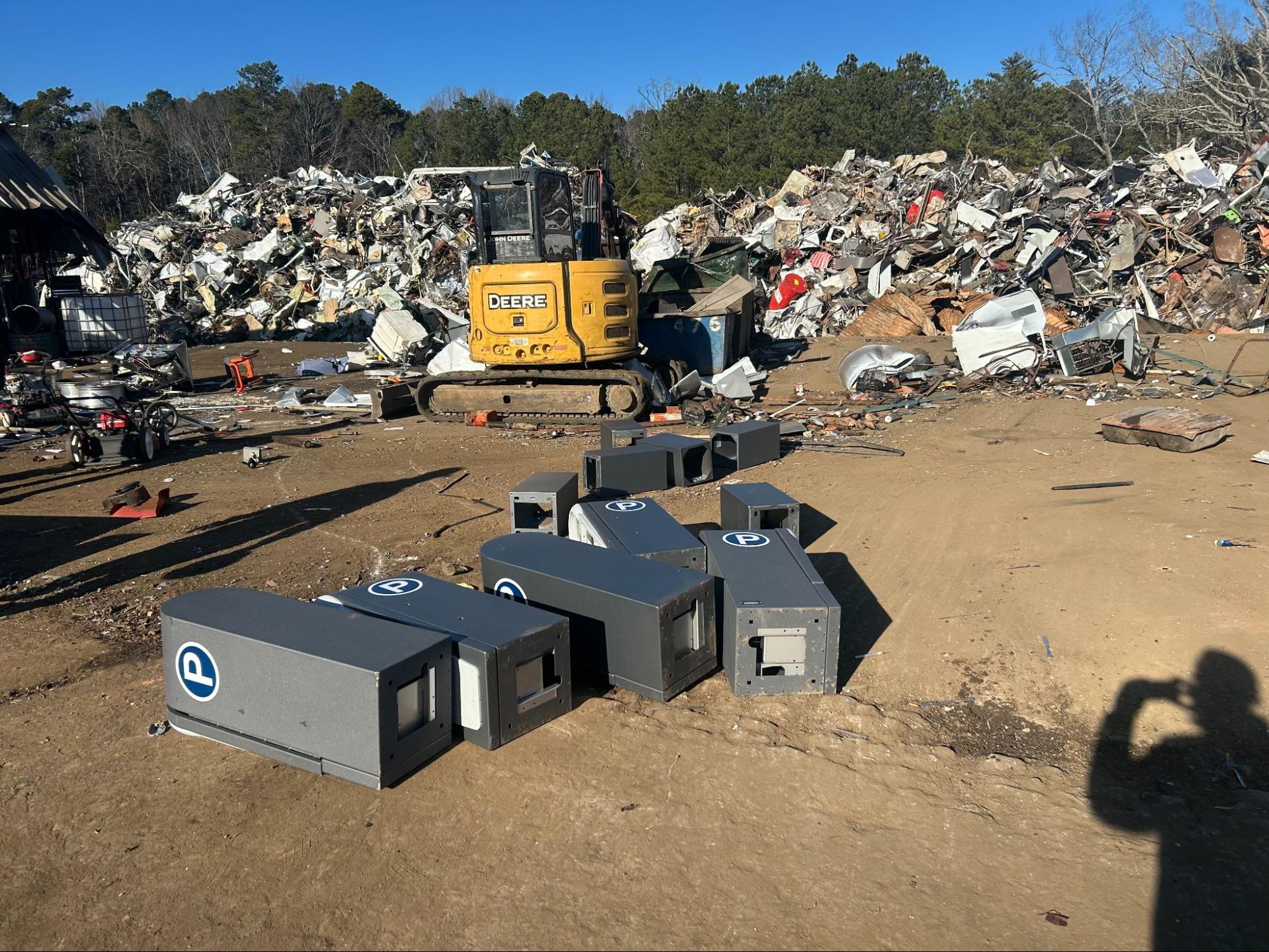
Walk into the back office of almost any aging parking facility and you'll find them: hulking pay-on-foot machines, ticket dispensers, and gate arm controllers that once represented the state of the art in parking management. Today, they represent something else entirely, which is a growing financial liability hiding in plain sight.
We recently cleared a collection of these legacy machines out of storage ourselves. They were outdated, no longer usable, and taking up space. But clearing them out sparked a bigger question: how much money do operators actually lose while these systems are still running?
The answer is more than most people realize.
What Legacy Parking Systems Are Really Costing You
Hardware Maintenance and Repair
Pay-on-foot machines and traditional access control equipment are expensive to keep alive. Ticket dispensers jam. Payment terminals fail. Gate arms malfunction during the busiest periods, which is exactly when you can least afford downtime.
Every service call comes with a fee. Parts for aging equipment are increasingly hard to source. And when a technician has to travel to your parking facility for an emergency repair, you're also absorbing lost parking fees during the outage.
These costs tend to sneak up on operators because they arrive one incident at a time, but they compound quickly over a year. According to the International Parking & Mobility Institute, maintenance and operational overhead are among the top cost drivers for parking facility owners managing legacy infrastructure.
The Staffing Load Nobody Talks About
Legacy parking management systems don't just break, they require people. Enforcement officers patrol for violations. Staff manage permit distribution. Someone has to reconcile cash payments, manage error tickets, and respond when a driver gets stuck at the gate.
That labor overhead is a fixed cost that runs whether your parking lot is full or half-empty. It doesn't scale down on slow days, and it doesn't disappear when the lot is running smoothly.
Modern parking management platforms automate the tasks that currently eat staff hours, including enforcement, rate adjustments, and reporting.
Static Pricing Leaves Revenue Behind
One of the most overlooked costs of outdated parking technology isn't an expense at all. It's revenue that never gets collected.
Pay-on-foot machines charge a flat rate. They don't know that it's a holiday weekend, that a major event is driving traffic to your parking areas, or that demand has spiked 40% since Tuesday. The parking space gets filled at the same rate regardless.
AI-driven pricing, by contrast, adjusts parking fees in real time based on demand, time of day, and local conditions. TheUrban Land Institute has highlighted dynamic pricing as one of the key strategies for unlocking the full revenue potential of parking assets in mixed-use and commercial developments. Operators on modern parking management systems consistently capture more revenue from the same parking assets simply because the rate reflects what the market will actually bear.
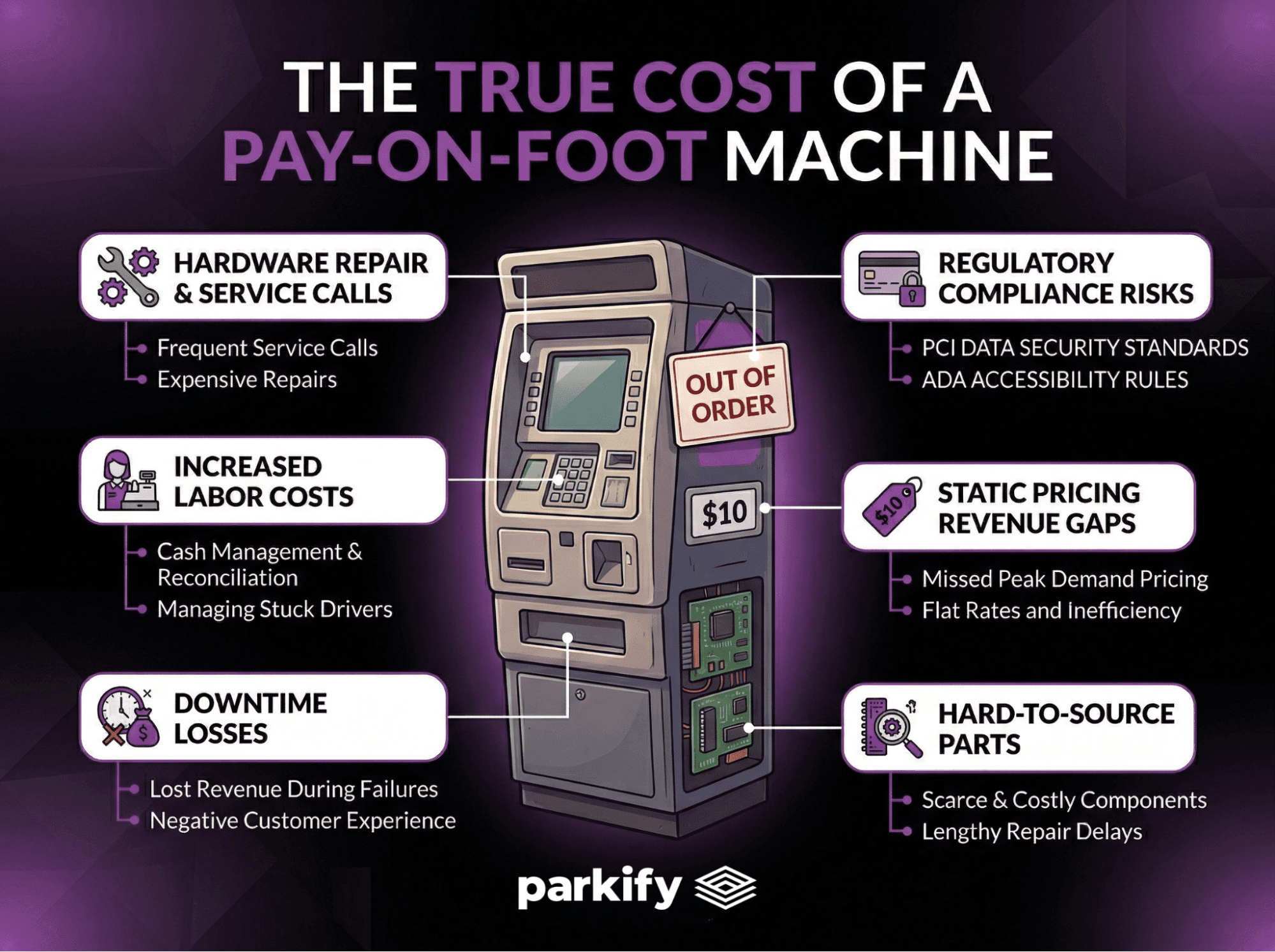
The Pay-on-Foot Machine: A Closer Look at the Problem
Pay-on-foot stations were an improvement over manual cash collection when they were introduced. Drivers could pay at a kiosk before returning to their vehicle, which reduced exit lane congestion and sped up traffic flow. For their time, they worked.
But they were built for a different era of parking operations, and the cracks have been showing for years.
Common failure points include:
Bill validators that jam or reject valid currency
Thermal printers running out of paper mid-shift
Touchscreens that stop responding in cold weather
Network connectivity issues that take payment processing offline
Software that hasn't been updated in years and can no longer integrate with modern management systems
Each of these failures creates a friction point in the parking experience. Drivers get frustrated. Staff get pulled away from other tasks. And the parking operation absorbs the cost of every minute the system isn't working correctly.
What Modern Parking Management Technology Replaces All of This With
License Plate Recognition
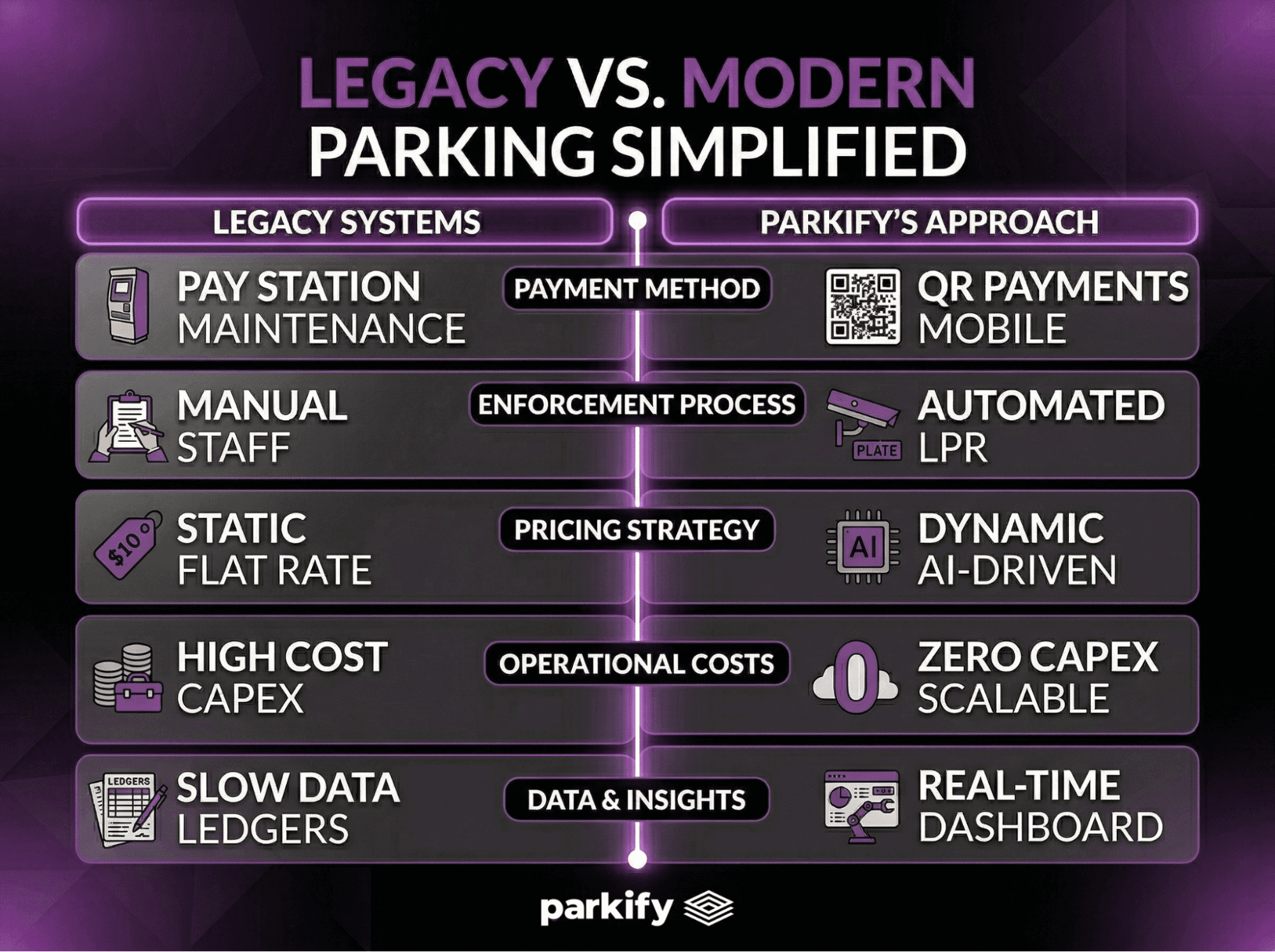
License plate recognition technology identifies vehicles at entry and exit without a ticket, a gate arm interaction, or a pay station. The system reads the license plate, logs the parking session, and links payment to that license plate number automatically.
Drivers don't lose tickets. Enforcement doesn't require an officer walking the lot. And the data captured through LPR gives operators real-time visibility into parking availability, occupancy trends, and revenue by zone.
An LPR system replaces multiple hardware dependencies with a single, software-driven workflow.
QR Code Payments Without an App
Instead of walking to a pay-on-foot kiosk, drivers scan a QR code posted at their parking stall or at the lot entrance. Payment completes on their phone in seconds. No mobile app required, no account to create, and no ticket to hang onto.
This approach eliminates the maintenance burden of payment kiosks entirely while delivering a faster customer experience. It also removes cash handling from the equation, which reduces both overhead and risk.
AI-Powered Rate Optimization
Parkify's AI continuously monitors conditions and adjusts parking fees to match real-time demand. When traffic congestion is pushing drivers toward your lot, rates reflect that demand. During off-peak hours, competitive pricing keeps parking spaces filled rather than sitting empty.
This isn't a feature that requires manual oversight. The parking management system handles it automatically, which is exactly the kind of operational efficiency that legacy hardware simply cannot offer.
Zero Upfront Hardware Cost
Here's the part that tends to surprise operators: switching to a modern parking management solution doesn't require a capital expenditure. Parkify operates on a zero CapEx model, meaning there's no hardware to purchase upfront and no infrastructure to finance.
That's a significant shift from the economics of pay-on-foot machines, which require substantial investment just to install and then ongoing maintenance costs throughout their lifespan.
The Real Math on Legacy Systems
When you add it all up across a year, the picture becomes clear:
Hardware repair and maintenance costs
Lost revenue from static pricing
Labor for manual enforcement and permit management
Downtime revenue loss during equipment failures
Capital tied up in aging technology with no upgrade path
Legacy parking management technology doesn't just cost money to maintain. It actively limits how much revenue your parking facility can generate. And because these costs are distributed across different budget lines, they're easy to underestimate.

It's Time to Move On
Those pay-on-foot machines in the back office don't just represent outdated hardware. They represent a model of parking operations that was built for a world without AI, without license plate recognition, and without real-time data.
The operators seeing the strongest results from their parking assets today aren't maintaining that old model. They're running software-driven parking systems that handle enforcement, pricing, and the guest experience automatically, without the overhead that legacy hardware demands.
If your parking lot is still running on technology from a previous decade, the hidden costs are already adding up. The question is whether you want to keep absorbing them.
Book a free strategy session with Parkify to find out how much revenue your current system is leaving on the table.