Surface Lot Monetization Roadmap: From Underutilized Asphalt to Revenue-Generating Asset

Short Answer: Most surface lots earn far less than they could because no one is measuring, pricing, or enforcing them. The fastest way to monetize that asphalt is a five-step roadmap: audit usage, set an access model, make paying effortless, enforce with license plate recognition, and price with live data. With a zero CapEx platform, a tired surface parking lot can start generating revenue in under 30 days.
Why Surface Lots Get Overlooked
A surface lot looks simple, so it gets treated as simple. Owners pave it, paint a few lines, and move on, while the parking garage down the block gets all the attention. That habit leaves money sitting in the open.
Morgan Copeland, COO at Parkify, puts it:
"Surface lots are often the least controlled, least monitored, and least enforced parking assets a property has." He adds that they "tend to have the fastest payback period of any property type we work with."
That low baseline is the opportunity. Because the starting point is loose signage and informal use, even small changes produce quick gains. The roadmap below turns an idle parking area into a working asset.
The Surface Lot Monetization Roadmap
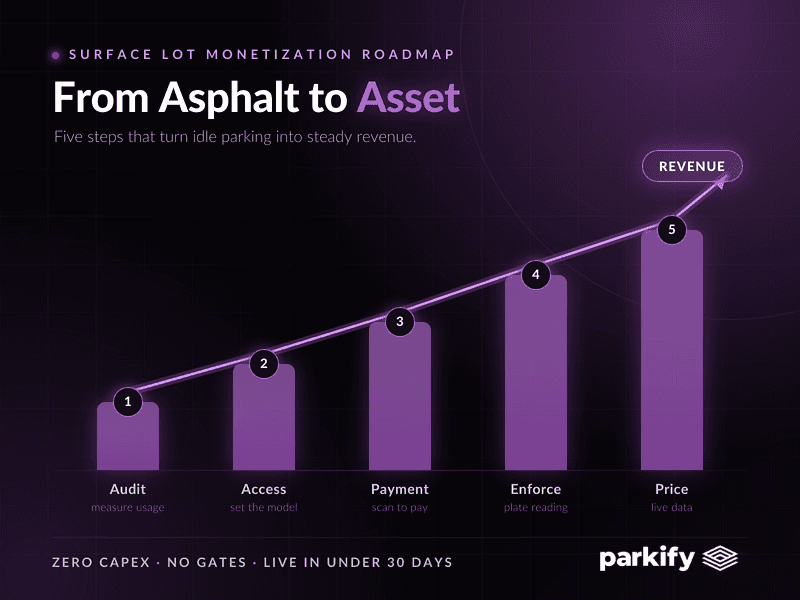
Step 1: Audit What You Actually Have
You cannot price or protect what you have not measured. Start by counting stalls, mapping current use, and noting who parks for free today.
Copeland's advice for owners is direct:
"Audit what you actually have. Before you talk about rates or technology, you need to know your stall count, your current utilization, who's parking there, and whether enforcement exists at all."
A short audit usually reveals the gap between paid parking and the cars actually using the lot, including neighbors and tenants' guests who treat the space as free parking.
Step 2: Choose the Right Access Model
Next, decide how each parking space earns its keep. A single surface lot can support several parking options at once:
Hourly parking for short visits, billed by the parking session
Monthly parking or a monthly permit for regular drivers, issued as a digital permit
Permit parking zones for tenants, with general first-served basis spaces for everyone else
After-hours public parking when daytime demand drops
Keeping these segments separate, rather than blending tenant and visitor traffic, prevents the conflicts that fill a lot with the wrong cars.
Step 3: Make Paying Effortless
A pay station is one more thing to break, and a required mobile app loses drivers at every download step. Parkify posts a QR code instead. A driver scans it, enters their license plate, and pays by credit card or debit card in seconds, with no app and no account to create.
That simplicity matters on a surface lot, where people expect easy access and a quick exit. As Copeland puts it, "apps create friction, and friction costs you revenue." Payment ties to the plate, so there is no paper parking receipt to track and no kiosk to maintain.
Step 4: Enforce Automatically with License Plate Recognition
Monetization only works if non-payers cannot sit for free. License plate recognition cameras read every plate, check it against valid permit and payment records, and flag anything that does not belong. This gives a gateless surface parking lot the control of a garage without gate arms, attendants, or the capital cost.
Enforcement also captures the plate information behind every visit, which feeds the pricing decisions in the next step.
Step 5: Price With Live Data
Once usage flows into one dashboard, parking rates stop being guesswork. Owners can raise parking charges during peak demand, discount slow periods to fill empty spaces, and watch revenue per stall in real time.
Copeland frames the bigger picture this way:
"The properties that win in the next five years are the ones treating parking like a data product, not a line item."
Extra Asphalt, New Revenue Streams
Once the basics run on their own, a surface lot can do more than collect parking fees. A few additions stretch the same footprint further:
Electric vehicle charging stalls that earn on both the energy and the premium space
Reserved monthly permits sold to nearby businesses or a neighboring garage that is at capacity
Overflow inventory opened to public parking on nights and weekends
Each option uses space that already exists, so most of the upside lands close to pure margin.
Why Zero CapEx Makes the First Move Easy
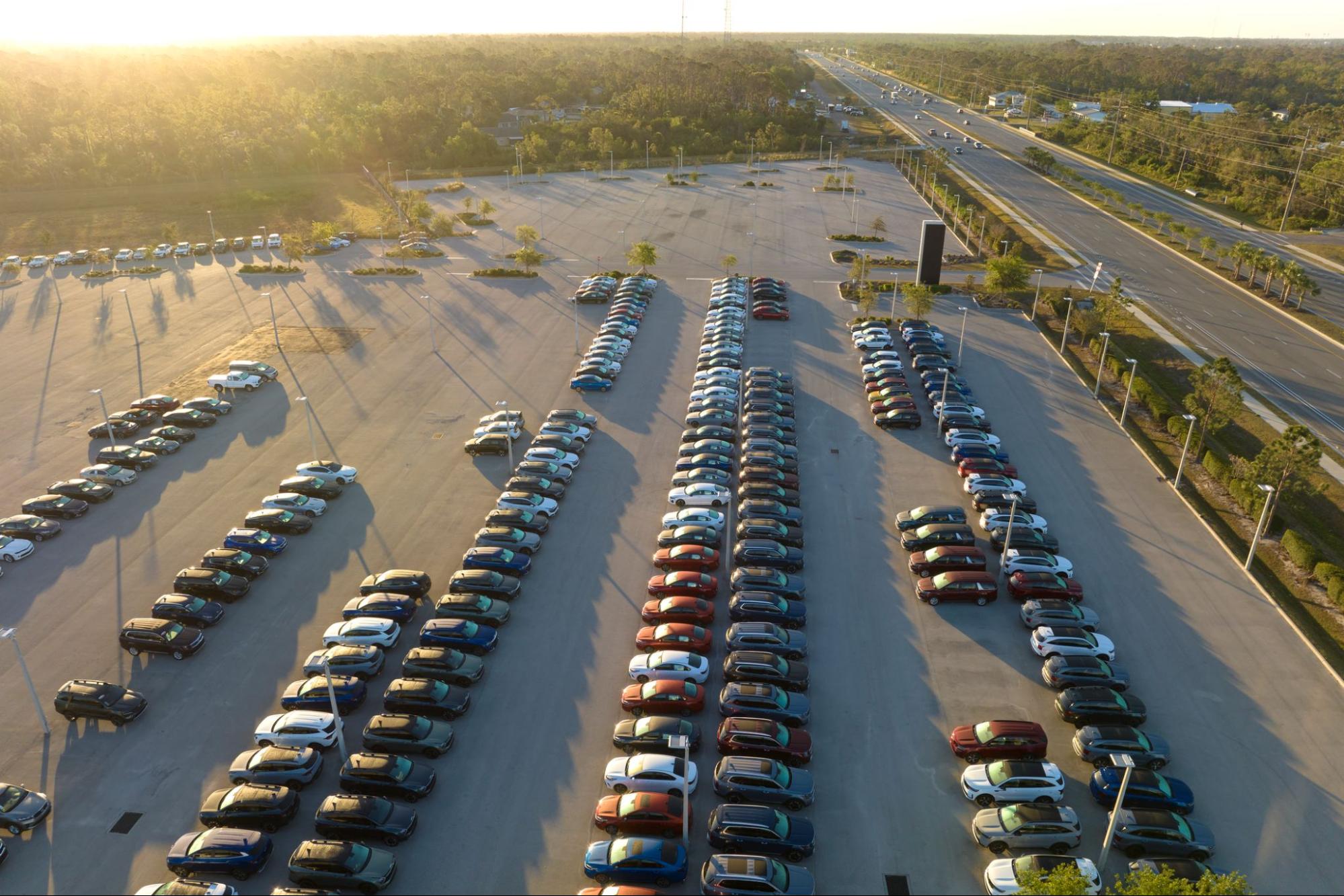
The usual reason a surface lot stays idle is the imagined cost of fixing it. Parkify removes that barrier. There is no hardware to buy and no kiosk to install, and the platform runs on a revenue model that pays for itself from what the lot earns.
"It means you don't write a check to get started," Copeland says of the zero CapEx model. Most properties go live in under 30 days, so the asphalt starts paying its way almost immediately.
Ready to put your surface lot to work? Book a free strategy session with Parkify and get a monetization plan built around your property.
Frequently Asked Questions
How do I start monetizing a surface parking lot?
Begin with an audit of stall count, current utilization, and who parks for free now. Once you know how the parking area is used, you can set parking rates, add a payment method, and turn on enforcement. A zero CapEx platform lets you launch without buying equipment.
Do I need gates or a pay station to control a surface lot?
No. License plate recognition handles access and enforcement on a gateless lot, reading each license plate and flagging cars without a valid permit or payment. That avoids the cost and upkeep of gate arms and pay stations while still protecting every parking space.
How do drivers pay without a mobile app?
Drivers scan a posted QR code, enter their plate, and pay by credit card or debit card in their phone browser. There is no app to download and no account to create, which keeps the parking session quick for hourly and monthly parking alike.
Can one surface lot serve both tenants and the public?
Yes. You can reserve permit parking zones for tenants, keep some first-served basis spaces, and open overflow to public parking after hours. Separating these parking options keeps the lot orderly and revenue flowing around the clock.
What about accessible parking and EV drivers?
A monetized lot still reserves accessible parking spaces and can add electric vehicle charging stalls. Both fit the same digital system, so an accessible parking space or EV stall is tracked and enforced like any other.