Upgrade Your Parking Lot Design & Experience With New Technology

The physical layout of a parking lot matters, but technology is what determines whether that lot actually works well. A surface parking lot with perfect stall angles and ideal traffic flow can still frustrate every visitor if the payment process is clunky, enforcement is inconsistent, or the user experience breaks down the moment someone pulls in.
For property owners and operators, upgrading a parking facility no longer means pouring money into new asphalt or a full structural redesign. The most impactful improvements today are technological, and they can be layered onto an existing parking layout without a major capital investment.
Why Technology Is Now the Core of Parking Lot Design
Parking lot design has traditionally focused on physical elements: the number of parking spaces, stall dimensions for standard vehicles versus a light truck, accessible parking space placement, and how pedestrians move through the facility safely.
Those fundamentals still matter. But once the physical design is set, what operators can actually control on a day-to-day basis is the technology layer sitting on top of it.
That layer determines:
How quickly a visitor finds an open space and completes payment
Whether traffic flow through the lot stays smooth or backs up at entry and exit points
How accessible parking areas are monitored and enforced
How much revenue the facility actually captures versus what it leaves on the table
Getting that layer right is where most parking operations fall short, and where the biggest opportunity for improvement exists.
The Technology Problems Holding Parking Lots Back
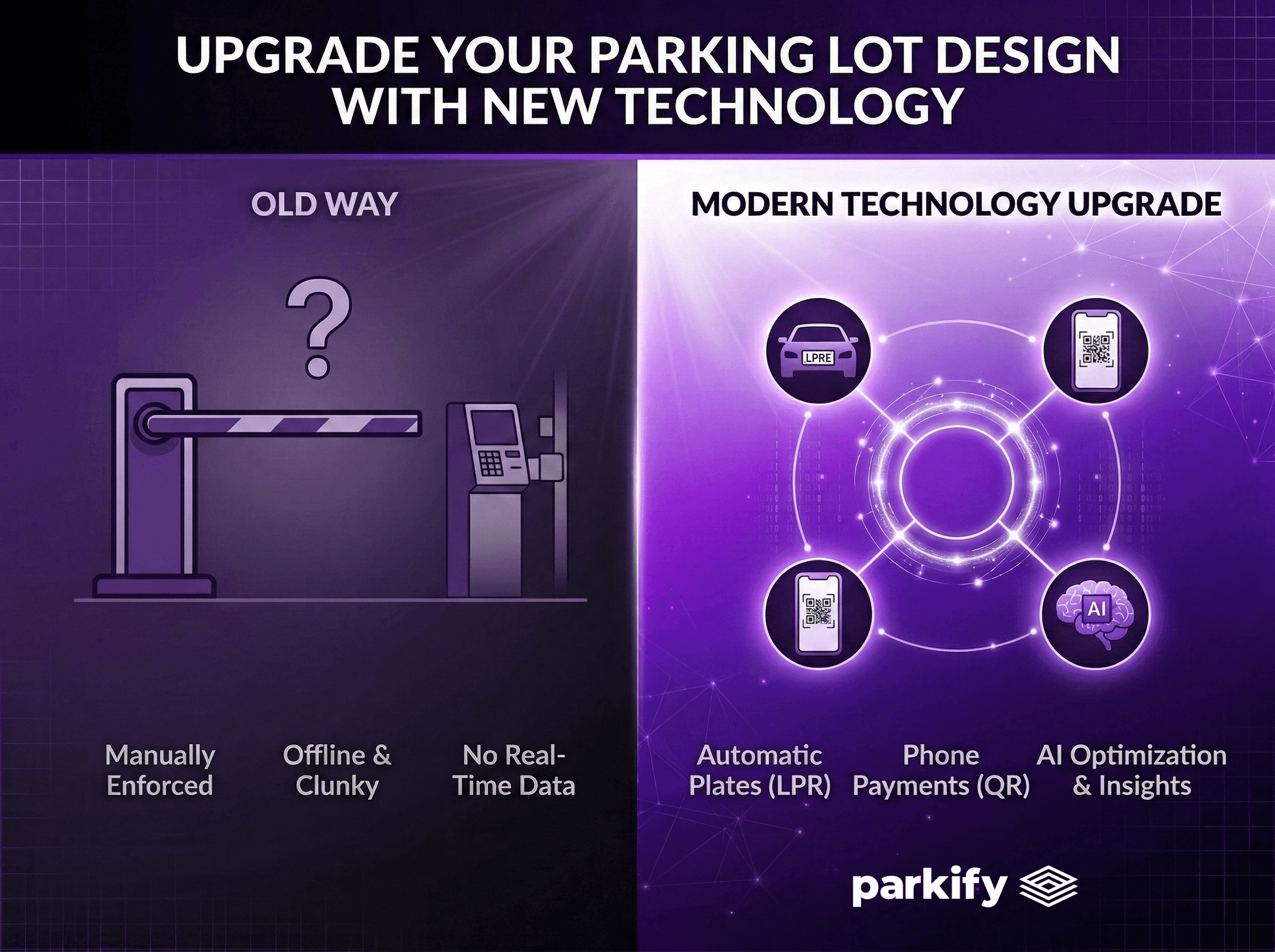
Outdated Payment Infrastructure
A card reader bolted to a pay station near the parking structure entrance was a reasonable solution fifteen years ago. Today, it creates a bottleneck. Visitors hunt for the machine, fumble with a credit card, and then have to remember their parking stall number or return to their vehicle to check.
When the card reader goes offline or the machine jams, the whole system stalls.
No Real-Time Visibility
Most parking facility operators have no live picture of what's happening across their parking areas. They know how many total parking spaces exist in theory, but they have no data on which designated areas are filling up first, where traffic flow is breaking down, or how revenue is tracking hour by hour.
Decisions get made on gut feel rather than real information.
Manual Enforcement
Monitoring every vehicle in a parking lot for compliance, whether it's time limits, permit parking zones, or accessible parking space rules, requires a person physically walking the lot. That's expensive, inconsistent, and often too slow to catch violations before they create problems for legitimate users.
How Modern Technology Upgrades the Parking Experience
License Plate Recognition Replaces Tickets and Kiosks
Parkify's LPR system reads each vehicle's license plate automatically at entry and exit. There is no paper ticket to dispense, no stall number to remember, and no pay-on-foot station to locate before leaving.
The system ties every vehicle parking session to a license plate from the moment the vehicle enters. Payment, validation, permit status, and enforcement all run off that single data point. For the visitor, the experience is simply: park, pay on your phone via QR code, and leave.
For operators, every vehicle in the facility is tracked in real time without any manual input.
QR Code Payments Without an App
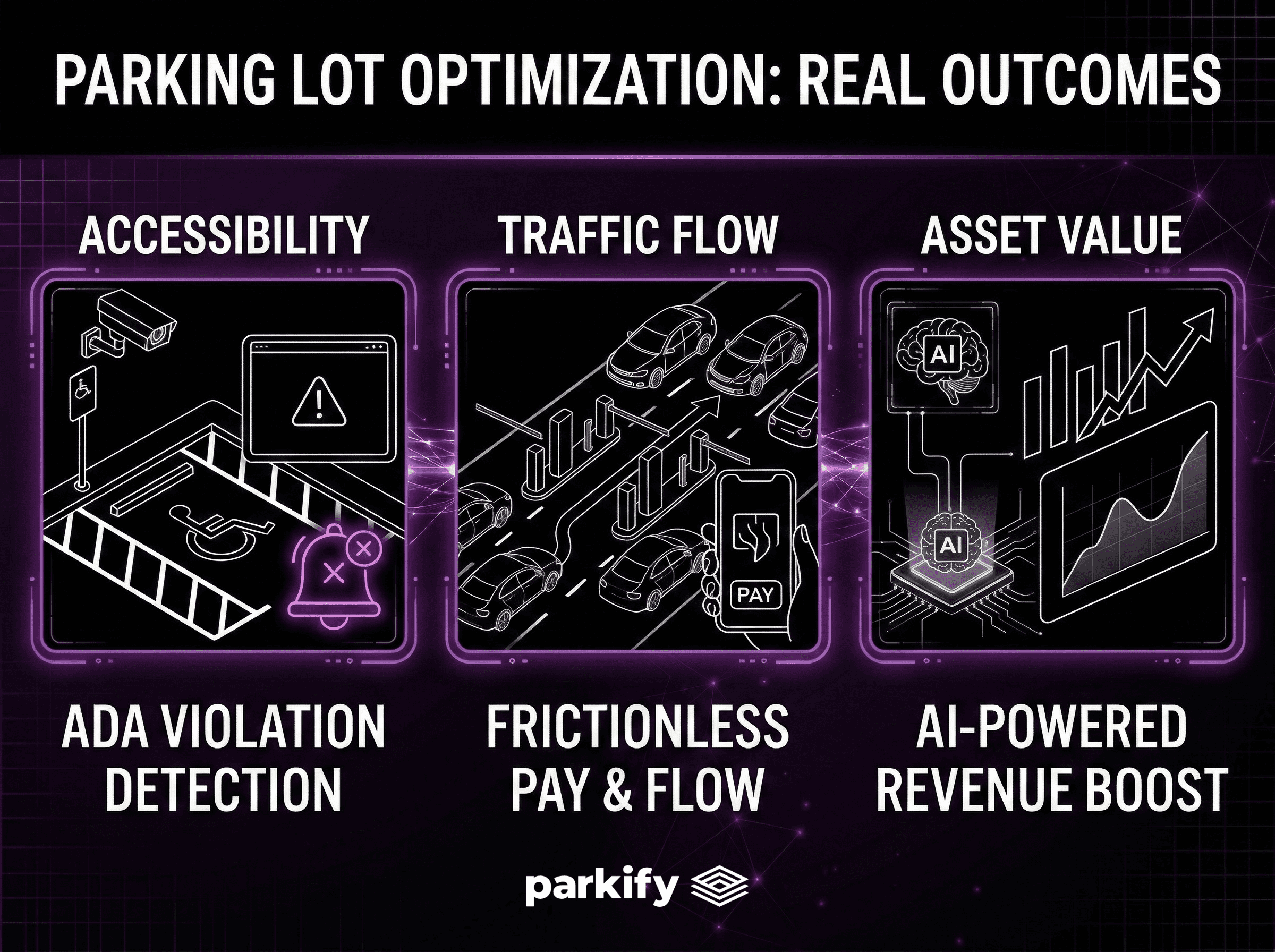
Parkify's scan-to-pay setup posts QR codes throughout the parking facility, on signage at entry, at parking columns, or near the exit gate. Visitors scan with their phone, enter their license plate number, and pay with a credit card or digital wallet in seconds.
No mobile app required. No card reader to maintain. Payment is processed digitally and linked to the vehicle automatically.
This approach works across every parking lot type, from a small surface parking lot to a multi-level parking structure, without any changes to the physical layout.
AI-Powered Rate Optimization
Static pricing is one of the most common ways parking facilities leave revenue uncaptured. A busy Friday evening and a slow Tuesday morning both get charged the same rate, which means the facility is undercharging when demand is high and potentially discouraging visitors when demand is low.
Parkify's AI rate engine adjusts pricing based on real-time demand, time of day, and occupancy data across parking areas. The result is more revenue during peak periods and better utilization during slow ones, without any manual rate changes.
Accessible Parking and Compliance in a Tech-Driven Facility
Technology upgrades don't change the physical requirements around accessible parking, but they do make compliance easier to maintain over time.
The U.S. Access Board establishes design standards for accessible parking spaces, including requirements for an access aisle, signage, and an accessible route connecting the designated area to the facility entrance. These requirements apply to any vehicle parking facility regardless of size.
What technology adds is enforcement. An LPR-based system can flag when a non-permitted vehicle occupies an accessible parking space, alerting operators immediately rather than waiting for a staff member to discover it on a manual sweep. That's a meaningful improvement for facilities that take accessibility seriously but don't have the staffing to monitor every parking spot at all times.
Real-Time Data Makes the Whole System Smarter
One of the most underappreciated benefits of a technology-driven parking facility is the data it generates. Knowing the total number of parking spaces is just the starting point. A modern system tells operators:
Which areas of the lot fill first, and which stay underutilized
How long the average parking session runs by time of day
Where traffic flow slows down and why
How revenue compares across days, weeks, and months
That information turns a parking lot from a passive asset into something operators can actively manage and improve. It also gives facilities the documentation they need if questions arise around revenue, incidents, or accessibility compliance.

Getting Started Without the Capital Expense
The biggest barrier to upgrading parking lot technology has historically been cost. Installing gate systems, pay stations, cameras, and the infrastructure to run them required significant upfront investment and often a long-term contract with a parking management company.
Parkify's zero-capex model changes that. The full technology stack, including LPR cameras, QR payment infrastructure, AI rate optimization, and the management dashboard, is available with no upfront hardware purchase. Installation typically takes under 30 days and runs without disrupting normal parking operations.
The result is a parking facility that operates smarter, serves visitors better, and generates more revenue, without a redesign or a capital outlay to get there.
Ready to see what a technology-driven parking upgrade looks like for your property? Book a free strategy session with Parkify today.