What Does Validate Parking Mean? How Parkify Does It Automatically

If you've ever pulled a ticket at a parking garage, walked into a restaurant or office building, and had someone stamp or scan it before you left, you've experienced parking validation. It's a concept that's been around for decades, but the way it actually works, and the technology behind it, has changed a lot.
For businesses that want to offer validated parking to guests and visitors, the old process involves paper tickets, staffed booths, pay-on-foot kiosks, and a manual validation process that creates more friction than it solves. Parkify handles all of it automatically.
What Does Validate Parking Mean?
Parking validation is an arrangement between a business and a parking facility that allows visitors to park for free, or at a discounted rate, because the business they're visiting covers part or all of the parking fee.
The classic example: you visit a retail store or office in a parking garage, and the front desk gives you a validation barcode or stamps your parking ticket. When you reach the exit gate, the validation is applied, and your parking session is reduced or covered entirely.
Validation is common in:
Shopping centers and retail districts
Medical offices and clinics
Hotels offering complimentary or discounted parking for guests
Office buildings with visitor parking for clients
Venues and event spaces for special event attendees
The intent is straightforward. The business wants to make the parking experience easy and affordable so visitors aren't discouraged by the parking fee before they even walk in. The challenge has always been execution.
Why Traditional Validation Is a Headache
The traditional validation process involves a lot of moving parts, and most of them are manual.
A visitor pulls a ticket at the entry, parks, visits the business, gets their ticket stamped or scanned at the box office, front desk, or a pay-on-foot station, then takes that validated ticket to the exit gate. If anything breaks down in that chain, the visitor is stuck. A lost ticket, a broken pay-on-foot kiosk, or a confused parking attendant can turn a simple errand into a frustrating delay.
For the business itself, tracking who validated, how much it costs, and reconciling that with the parking facility is an accounting task that takes real time every month.
On top of that, systems relying on a mobile app for digital validation create their own friction. Not every visitor wants to download an app just to park for an hour.
How Parkify Handles Validation Automatically
Parkify replaces the manual validation chain with an automated system built around QR codes and license plate recognition (LPR). There is no paper ticket, no stamping process, and no pay-on-foot station required.
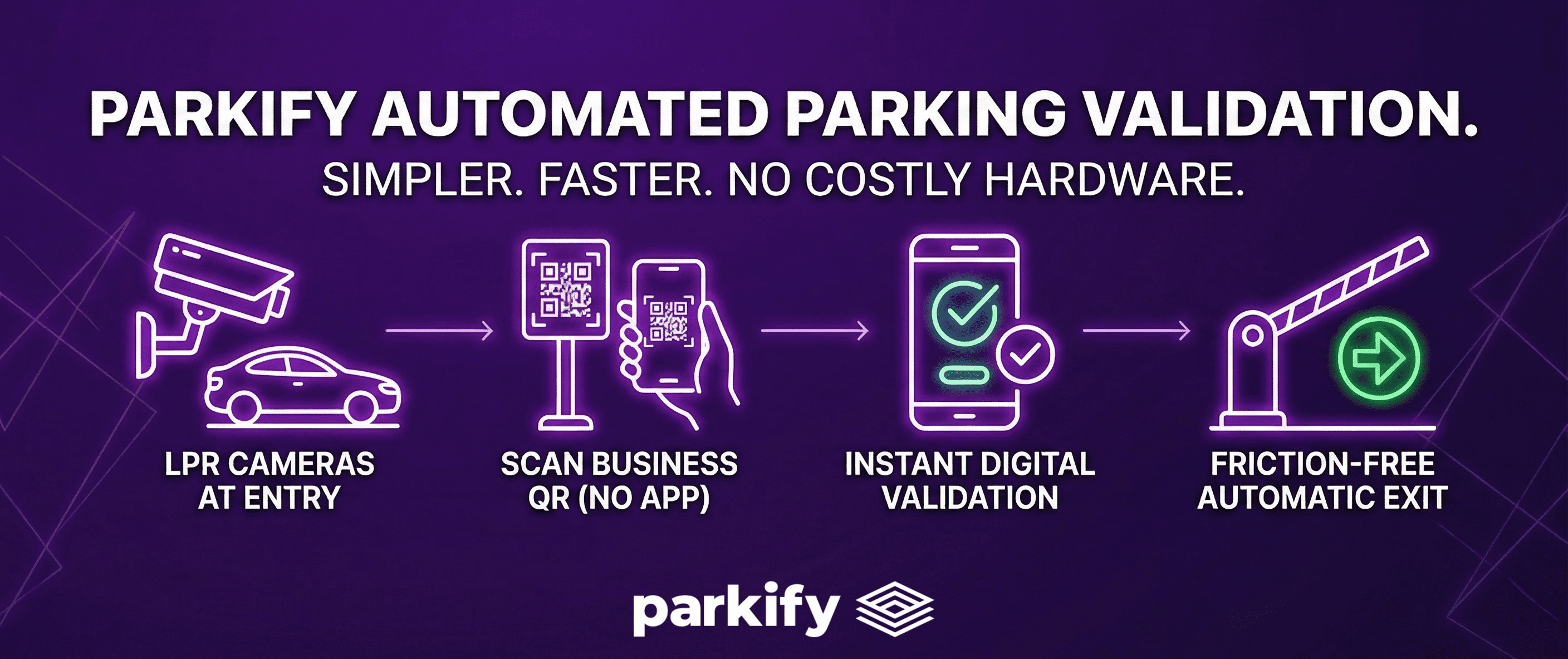
Here's how the validation process works with Parkify:
A visitor pulls into the parking lot or parking garage and is captured by an LPR camera, which reads their license plate number automatically.
The visitor scans a QR code posted at the parking column, the entrance, or inside the business.
If their visit qualifies for free parking or a discounted rate, that is applied to their parking session digitally, with no staff involvement.
At the exit gate, the system has already confirmed their license plate and validation status. The gate opens.
No mobile app. No paper ticket. No validation barcode to keep track of. The guest just drives in, conducts their visit, and drives out.
Validation Options Businesses Can Configure
One of the advantages of Parkify's platform is how flexible the validation settings are. Businesses aren't locked into one type of offer.
Free Parking for a Set Time Window
A medical office might validate for the first 90 minutes of a patient's parking session, covering the typical appointment window without handing out free parking to anyone who parks nearby all day.
Discounted Rate for Verified Visitors
A hotel offering a valet service or self-parking option might apply a discounted rate for confirmed guests, while still charging a standard parking fee to outside visitors. The system identifies which license plate belongs to a guest based on reservation data or a QR code generated at check-in.
Permit Parking for Repeat Visitors
For businesses with regular clients, a parking pass or permit parking setup tied to a registered license plate can eliminate the validation step altogether. The LPR camera recognizes the plate, and the system applies the correct rate automatically without any action from the visitor.
Event-Based Validation
For a special event, a venue can activate validation for a specific time window, tied to a unique QR code distributed to attendees. When event parking is over, the code expires, and standard parking fees resume.
No Kiosks, No Tickets, No Chasing Down Receipts
Traditional validation infrastructure is expensive to install and maintain. Pay-on-foot stations break down. Paper tickets jam. Staffed validation booths add labor costs.
Parkify eliminates all of that. Because the entire validation process runs through LPR cameras and QR code scans, there is no hardware to maintain beyond the cameras at entry and exit. Visitors pay with a credit card or debit card through their phone if a fee applies, and validated visitors simply exit without stopping.
This is especially useful for properties that want to offer visitor parking without building out a full parking operation. A single parking lot or small parking garage can run automated validation without a parking attendant on-site.
What This Means for Street Parking and Overflow Situations
Some businesses rely on a combination of on-site parking and nearby street parking or a secondary parking facility to handle overflow. Parkify can run validation across multiple locations through the same dashboard, so a visitor directed to a secondary lot for a special event still gets the same discounted parking experience without needing to visit a separate pay station.
For locations near public transportation hubs where guests might arrive by public transit and only need short-term parking, Parkify's time-based validation rules keep costs controlled without over-rewarding long-stay vehicles.
The Business Side: Tracking and Reconciliation
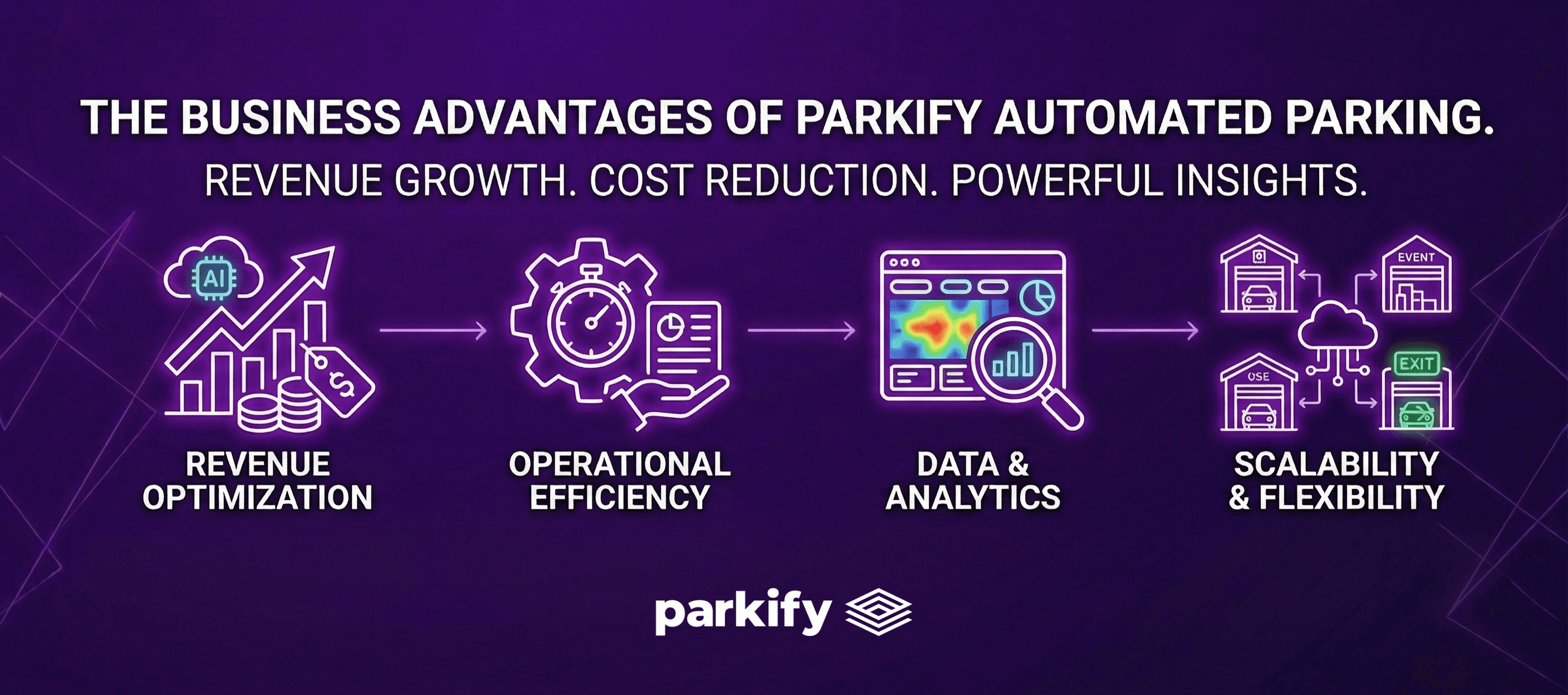
Beyond the guest experience, Parkify gives property and business owners real-time data on how much validation is being applied, which parking spaces and time windows are being used most, and what the net parking revenue looks like after discounts.
Instead of manually reconciling validation records at the end of the month, everything is captured automatically in the Parkify dashboard. Operators can see total validated sessions, the value of discounts applied, and overall revenue from parking operations in one place.
That visibility helps businesses make smarter decisions about their parking options, whether that means tightening the validation window, adjusting the discounted rate, or adding additional parking capacity for high-traffic periods.

Parkify Makes Validation Work for Both Sides
Parking validation, when done right, is good for everyone. Visitors get affordable parking and a low-effort experience. Businesses get more foot traffic and fewer complaints about parking fees. Property owners get accurate tracking and controlled costs.
The old way of doing it introduced enough friction that the benefit got lost in the process. Parkify removes the friction entirely, so validation works the way it was always supposed to.
Ready to automate parking validation for your property?Book a free strategy session with Parkify today.